

This substack is drawn from a recent conversation on PODS by PEI, a policy discussion series hosted by Policy Entrepreneurs Inc. Host Nirjan Rai and co-host Saumitra Neupane were joined by writer and political analyst Bishnu Sapkota to unpack the results of Nepal’s March 5th election. What follows are the key takeaways from that discussion.
Something happened in Nepal on March 5th, 2026 that is difficult to capture in the language of ordinary electoral politics. The Rastriya Swatantra Party (RSP), a party barely five years old, secured 182 seats in parliament — just shy of a two-thirds majority. Meanwhile, the Nepali Congress and UML, the twin pillars of Nepal’s post-1990 political order, were reduced to roughly 14% and 9% of seats respectively. Heavyweights like KP Oli lost their seats. So did Gagan Thapa, who had taken enormous personal and institutional risk to push reform from within the Congress.
In our latest episode of PODS by PEI, we sat down with writer and political analyst Bishnu Sapkota to make sense of what just happened — and what comes next.
Here are the key takeaways from that conversation.
1. This is a revolt within democracy, not against it
Nepal has had no shortage of historic political moments. The 1950s brought down the Ranas. 1990 restored multiparty democracy from absolute monarchy. 2006 ended a decade-long civil conflict and paved the way for a federal republic. Each of those moments was a struggle for democracy, often against an authoritarian force.
What began on September 8th and 9th, and culminated at the ballot box on March 5th, is categorically different. This was a demand for democracy to deliver — a revolt from within the democratic framework itself. Bishnu described it as a signal that people no longer believe democracy is enough on its own terms; they want it to actually function. That, in itself, is a meaningful political maturation.
2. The mandate is primarily personal, not institutional
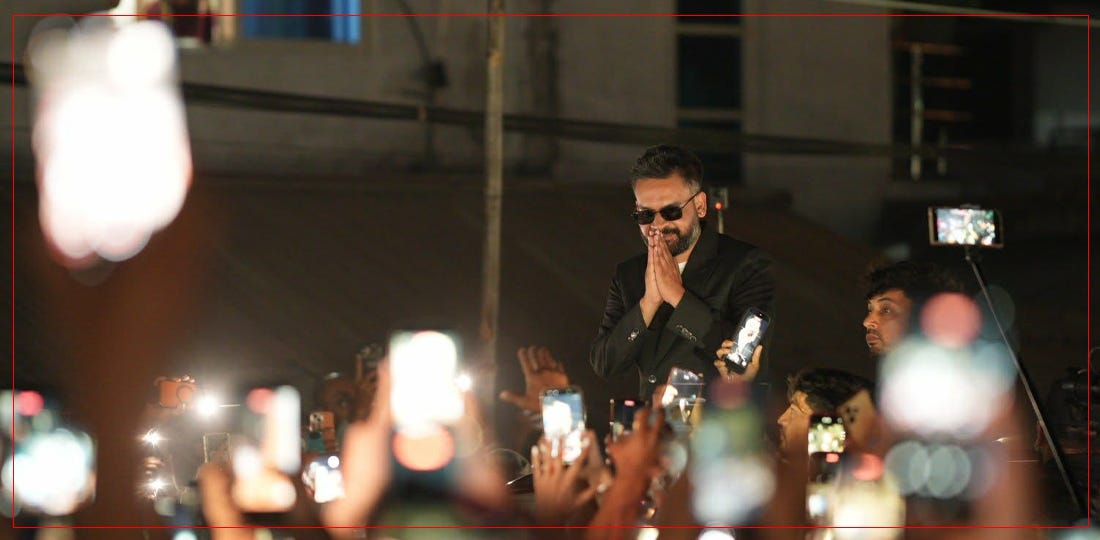
The sea of blue that swept Nepal is, in large part, a mandate for one person: Balen Shah. Voters in Madhesh called him balum — son, or the kind one. People across the country, particularly in urban and peri-urban areas, voted for RSP because of him, often without knowing who their local RSP candidate even was. In a parliamentary system, this has produced something that looks and feels like a presidential outcome.
This personalization of mandate is both RSP’s greatest strength and its most significant structural vulnerability. The hope of a nation is resting on one person whose governance vision, beyond his work as Kathmandu’s mayor, remains largely unarticulated to the public.
3. RSP is a rainbow — and that is both its promise and its problem
RSP is not a party in the conventional sense. It is an amalgamation: former Nepali Congress liberals, youth-led reformers from Bibeksheel, figures from the Madhesh political tradition, and activists who simply grew exhausted with the old order.
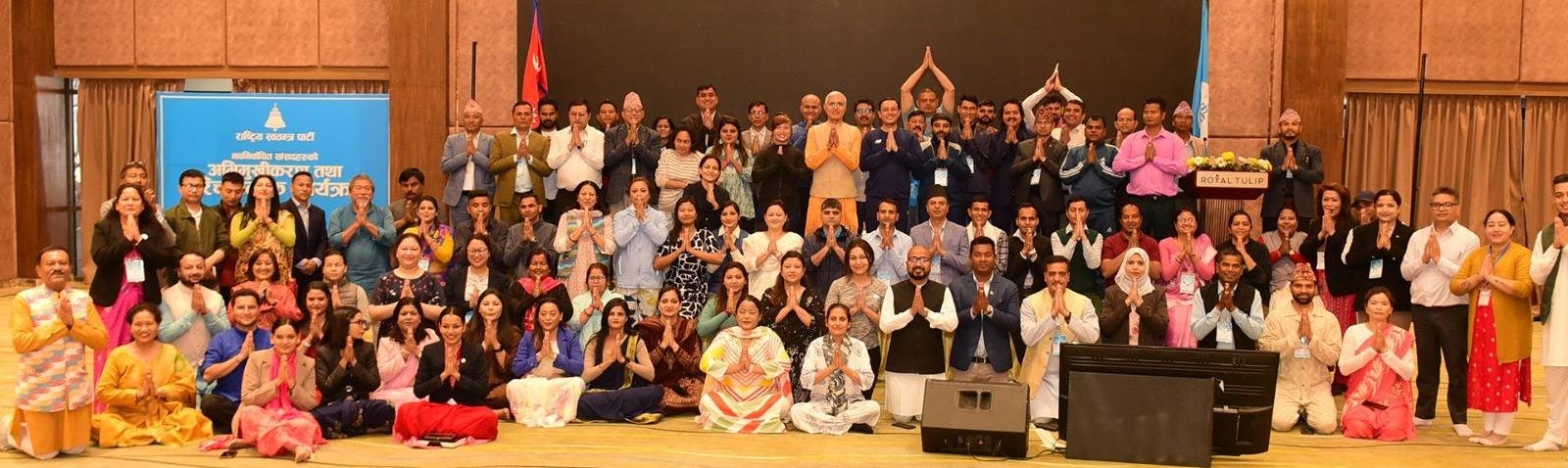
But this diversity comes with a cost. RSP has never held a general convention. There has been no public — or apparently internal — reckoning with what the party collectively stands for beyond “change.” The relationship between Balen Shah’s personal vision and RSP’s institutional direction has never been formally articulated. One hundred and sixty-plus of their 182 parliamentarians are entirely new. The enthusiasm is real, but so is the absence of a coherent governing framework.
4. The old parties are not finished — but they haven’t yet understood why they lost
The near-uniform collapse of the Congress, UML, and Nepali Communist Party is striking not just in scale but in its evenness. Voters didn’t distinguish much between them; they dumped them collectively as representatives of a failed political era. Yet in the days after the election, there has been remarkably little public introspection from party leaderships — particularly from UML, which appeared to be surveying its local committees for explanations rather than looking inward at its own leadership.
At the same time, the old parties are not gone. They govern at the provincial and local levels, where the vast majority of public service delivery actually happens. How they behave in that space — whether they genuinely reform or simply position themselves to blame RSP for everything — will shape Nepal’s politics for years.
5. Three things the new government must do early
Our conversation ended with some concrete expectations. Across our three perspectives, a few priorities stood out:
The composition of the cabinet will be the first signal. Who Balen chooses to lead which ministries will immediately indicate whether this government is serious about expertise and accountability, or whether the familiar logic of political patronage is simply being repackaged.
The economy needs attention first and fast. Nepal’s structural economic challenges are well-documented, and the government does not need to reinvent the wheel. A serious commitment to improving capital expenditure — where the frameworks already exist and the blockages are political, not technical — could produce early, visible wins.
Anti-corruption as a governing philosophy, not a campaign slogan. The Commission for the Investigation of Abuse of Authority (CIAA) cannot be where accountability is outsourced. The new government needs to articulate — concretely — how corruption will be tackled from the executive level down, not just handed off to a constitutional body.
And as a longer arc: political party and electoral reform. The Gen Z movement was, at its root, a response to a political system that structurally excludes genuine alternatives. If RSP does not use this mandate to make the system more open — including making itself a more democratically governed institution — Nepal risks cycling back into the same dysfunction a decade from now.
The moment is real. The questions are too.
Nepal is at a genuine inflection point. The mandate is historic. The momentum is real. The bar set by the previous generation of leaders is, frankly, low enough that doing things with basic competence and integrity would already constitute progress.
But the gap between public hope and institutional readiness is wide. RSP has a party without a convention, a prime minister without a publicly articulated vision, and 160 new parliamentarians without political experience. That is not a reason for despair — it is a reason to watch closely, ask hard questions, and hold the new government to the standards it campaigned on.
The PxP conversation goes much deeper — the numbers, the narratives, the fault lines within RSP, what the collapse of the old parties really means, and what the new government must deliver to justify the hope people have placed in it. Listen on Spotify and watch on YouTube.
Listen on Spotify and watch on YouTube.